 EightCap
Most retail investors end a year of CFD trading with a loss.
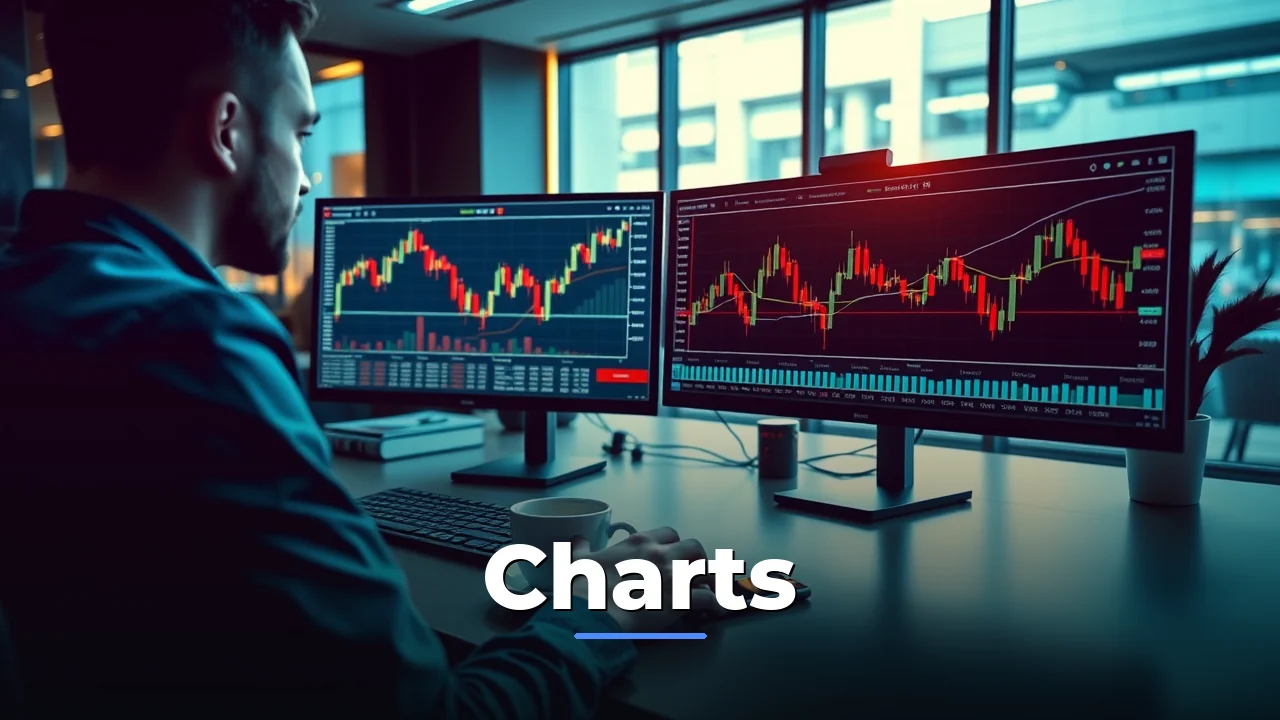
Clean charts, fast execution, and tools that don't fight you while you work. EightCap covers that base with native TradingView integration plus the classic MT4 and MT5 terminals. The catch for Kenya is the regulatory wrapper around those charts, which is worth understanding before you fund an account.
The charting experience from a retail trader's perspective: what works, what stumbles, and where the offshore setup changes the practical picture.
The Charting Arsenal
EightCap gives you five ways to pull up a chart. The headline feature is the native TradingView integration, not a half-baked iframe but the real charting engine embedded in the platform. You also get the full desktop and web versions of MT4 and MT5, plus WebTrader for browser-only sessions and TradeLocker for a modern, simplified interface.
| Platform | Best For | Charting Strength |
|---|---|---|
| TradingView | Price action and indicators | Native integration, custom layouts, drawing tools |
| MT4 | Classic forex trading | Familiar workflow, custom indicators, EAs |
| MT5 | Multi-asset and depth | More timeframes, economic calendar, 3D charts |
| WebTrader | Quick browser access | No install needed, synced with desktop |
| TradeLocker | Simple, modern UI | Clean design, easy multi-chart setup |
The TradingView integration matters more than it sounds. If you already use TradingView for analysis, having the same charts inside your broker account removes the copy-paste dance between platforms. You set your layouts once, and they stay.
Instruments Behind the Charts
Empty charts are useless. EightCap loads them with 800+ CFDs, which gives you a broad sandbox for the charting tools. The range breaks down into roughly 56 forex pairs, indices, metals, energies, about 580 share and ETF CFDs, and a crypto CFD list that passes 100 coins.
For chartists, the crypto range is the standout. Few brokers let you pull up a clean chart for 100+ different coins without leaving the platform. The share CFD list also gives you plenty of equity charts to work with, even if you never trade them.
| Asset Class | Approximate Count | What It Means |
|---|---|---|
| Forex pairs | 56 | Majors, minors, and exotics |
| Share and ETF CFDs | 580 | Global equities in one chart window |
| Crypto CFDs | 100+ | Wide coverage, no wallet needed |
| Indices, metals, energies | 60+ | Diversified macro trading |
One note on the crypto side: these are CFDs, not actual coins. You are trading price moves on a chart, not buying digital assets. That distinction matters for your tax treatment under the Kenya Revenue Authority (KRA), where CFD profits count as ordinary income.
Account Types and Spreads
EightCap keeps the account structure simple: Standard and Raw. The Standard account is commission-free with spreads from 1.0 pip, and the Raw account offers spreads from 0.0 pips with a USD 3.50 commission per lot per side. Minimum deposit is USD 100.
| Account Type | Spreads | Commission | Minimum Deposit |
|---|---|---|---|
| Standard | From 1.0 pip | None | USD 100 |
| Raw | From 0.0 pips | USD 3.50 per lot per side | USD 100 |
The Raw account is where the charting tools earn their keep. With spreads starting at zero, the price action on your chart is closer to the true market, and your indicators have less noise to filter. That said, the commission per lot adds up for scalpers, so the Standard account still makes sense for lower-frequency traders.

The Offshore Reality Check
EightCap serves Kenyan retail clients under Eightcap Global Limited, a Bahamas entity with SCB licence SIA-F220. The broker does not hold a Kenyan Capital Markets Authority (CMA) licence, and there is no local compensation cover.
This does not make the broker a scam, and it does not make charting with EightCap impossible. It does change the risk profile you are signing up for. CMA-licensed brokers must meet minimum paid-up capital of KES 50 million, segregate client funds, cap leverage, and submit to audits. Offshore entities answer to a different regulator with a different rulebook.
The leverage picture also differs. EightCap offers up to 1:500 on forex via the offshore entity, which is beyond the roughly 1:400 cap that CMA-licensed brokers follow for major pairs. Higher leverage amplifies both gains and drawdowns, and with no leverage cap from a local regulator, the risk sits on you.
Funding Without M-Pesa
Deposits and withdrawals at EightCap cover cards, bank wire, Skrill, and Neteller. The minimum deposit is USD 100, and the broker charges no deposit or withdrawal fees on its side. There is no native M-Pesa rail or any Kenya-specific payment method.
For Kenyan traders, this is the biggest practical friction point. M-Pesa is the dominant deposit and withdrawal channel in the country, and many local brokers integrate it directly. At EightCap, you must fund via international methods, which means two extra costs: the conversion from KES to USD or AUD, and any fees your bank or the payment processor charges for the transfer.
| Payment Method | Status | Notes |
|---|---|---|
| Visa / Mastercard | Available | Instant, card fees may apply |
| Bank wire | Available | Slower, intermediary bank fees possible |
| Skrill | Available | E-wallet, fast but conversion costs apply |
| Neteller | Available | Similar to Skrill |
| M-Pesa | Not available | No verified KES-specific rail at review |
The settlement currency also skips the local option. EightCap works with AUD, USD, EUR, GBP, NZD, CAD, and SGD depending on region, but there is no KES-denominated account. Every deposit and withdrawal carries a conversion cost, and you bear the exchange rate risk on your own funds.
Known Weak Spots
The missing local payment rails are the first limitation, and for Kenya specifically, that is not a minor issue. If you want instant M-Pesa withdrawals, this is not the broker for you.
The Islamic account situation is also murky. Reports conflict on whether EightCap offers a dedicated swap-free account, and no consistent verification exists at review. For observant Muslim traders, that means checking directly with support before depositing.
Support quality is a mixed bag. The broker has a live chat and email support, but response times and depth of answers vary. For a broker without local presence, fast and clear support matters more, because you cannot walk into an office.

On Leverage and Risk
The 1:500 leverage on forex is a feature and a trap at the same time. It lets you control a large position with a small margin, which is attractive when trades go your way. When they do not, the same leverage accelerates the loss.
A practical example: at 1:500, a 0.2% adverse move against your position wipes out the entire margin. At 1:100, the same move costs you 20% of margin. The chart shows the same price, but the account impact is radically different.
For new traders, starting with lower effective leverage is the sane path. You can trade with 1:500 on the platform but choose position sizes that keep your real exposure closer to 1:50 or 1:100. The charting tools do not force you to use maximum leverage.
Who It Works For
EightCap charts suit traders who already live in the TradingView ecosystem. The native integration removes a whole category of friction, and the 100+ crypto CFDs give you analysis opportunities most brokers cannot match.
Good match for:
- Traders who use TradingView daily and want their broker inside the same interface
- Crypto CFD traders who want 100+ coins on one platform
- Position traders who hold for days or weeks and do not mind slower withdrawals via card or wire
- Traders who prioritize a broad instrument range over local payment convenience
Bad match for:
- Traders who depend on M-Pesa for instant deposits and withdrawals
- Beginners who want a local CMA-licensed broker with KES 50 million paid-up capital and local recourse
- Scalpers who need the Raw account commission to make sense against frequent turnover
- Traders who want a swap-free account and cannot get a clear answer from support
Are the Charts Worth the Effort?
The charting experience at EightCap is genuinely strong. The TradingView integration alone puts it ahead of many brokers, and the platform range covers every workflow style. The instrument list is deep, especially on crypto.
The effort comes in the surrounding infrastructure. No M-Pesa, no KES account, offshore regulation, and possible conversion costs on every deposit and withdrawal. None of that shows up on the chart, but all of it affects your bottom line.
The verdict sits in the middle. For traders who value charting quality and a wide crypto range above local convenience, Eightcap delivers. For those who want the safety of a CMA-licensed broker and local payment rails, the effort is not worth it. The choice depends on which trade-offs you can live with.
Questions
Which charting platforms does EightCap support?
+
MT4, MT5, native TradingView integration, WebTrader, and TradeLocker. The TradingView integration is the standout feature for chart-focused traders.
Is EightCap regulated in Kenya?
+
No Kenyan CMA licence exists. Kenyan clients are served under the Bahamas SCB licence SIA-F220 through Eightcap Global Limited. The broker is not on the CMA register, and there is no local compensation cover.
What leverage does EightCap offer for forex?
+
Up to 1:500 on forex via the offshore entity. This is not set by a local regulator and exceeds the roughly 1:400 cap that CMA-licensed brokers follow for major pairs.